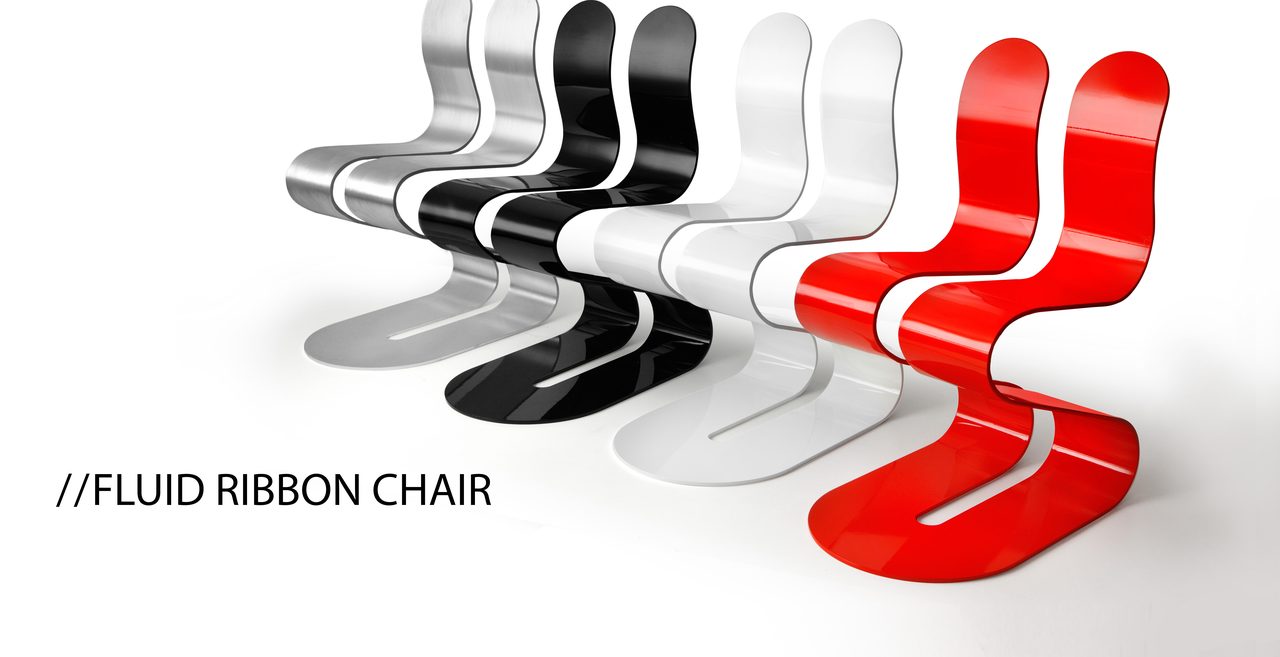
Challenging the idea of sitting still
The Fluid Ribbon Chair — Michael d’Amato — made in Italy by Lamberti Design
Splitting the seat into two independent halves is what allows a body to keep moving while it is being held.
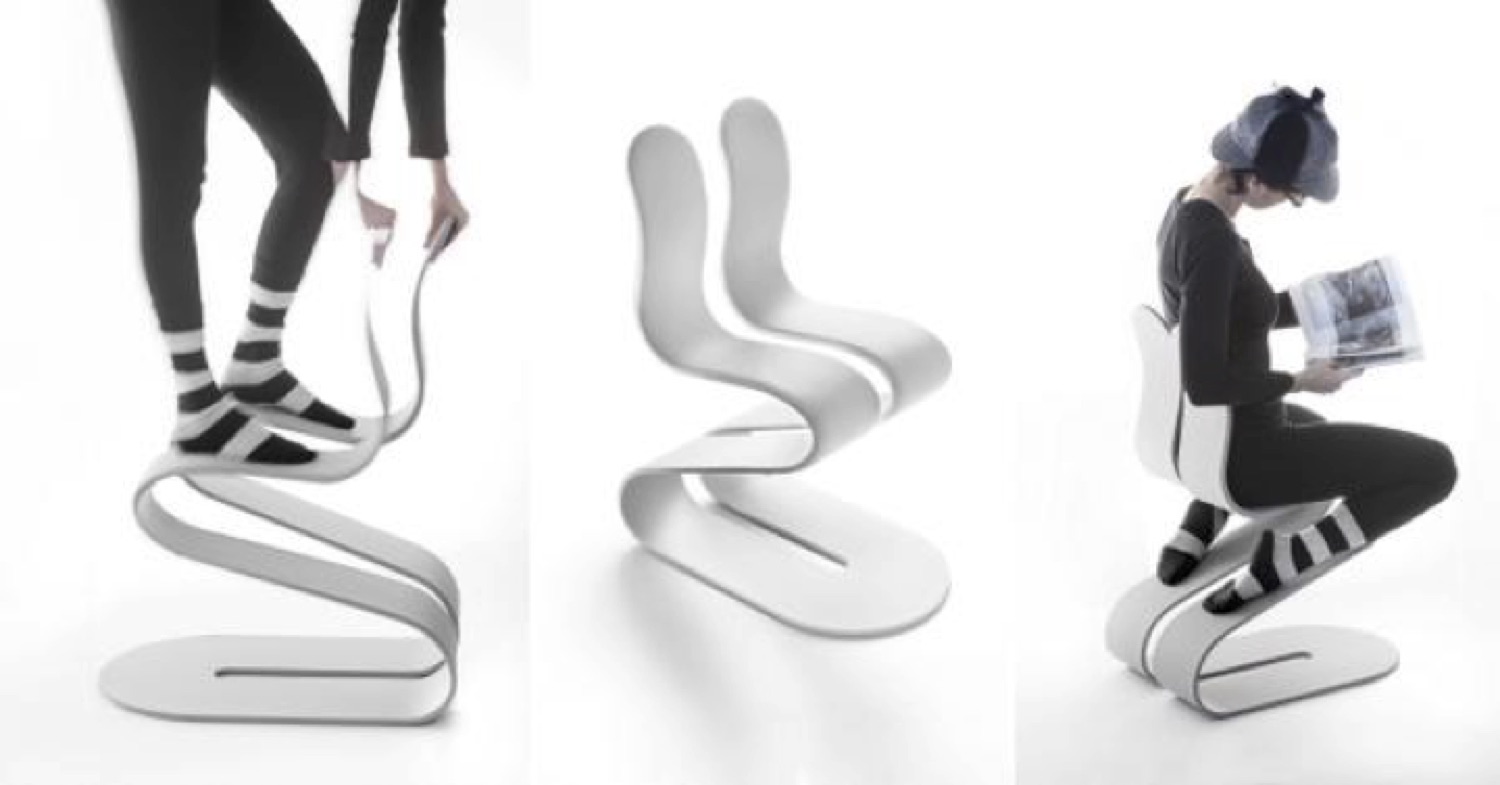
At Design Philadelphia /Adaptations/, the local press named sitting in the chair the most memorable moment of the festival.
The Fluid Ribbon Chair form came from the functional biomechanics of the body. Its dimensions were taken from NASA anthropometric data, and the form wrapped around those dimensions produced a single continuous surface that mimics the aesthetics of the human body. The premise is simple: ergonomics is not a correct position, it is movement through positions. The body can withstand a great many variations in position, but holding any one of them too long creates fatigue. Joints depend on constant small motion, because movement pumps synovial fluid through the joint space and keeps it lubricated. Splitting the seat into two independent halves is what allows a body to keep moving while it is being held. The hips stay free to rotate, and the lower back is carried through the motion instead of braced against it.
The journey began as a problem to solve. My brother had spent twenty years at a computer and had tried every ergonomic chair on the market. Nothing worked. He called me for a solution at a particularly low point in my own life, having lost nearly everything that a career had built at that time, and I was looking for something honest to build that could reconnect me with truth and value.
Recovering from a hard stretch of life asks for the same thing the body asks for. Resilience is not holding still under pressure but finding the next position without coming apart. Persistence is not rigidity, which is always the first thing to fail. Adaptability, sustained effort, and eventually a kind of peace are what carry a person through, and every one of them went into this design and into the work of bringing it to life.
Everyone has a journey. The Fluid Ribbon Chair was built to support it.
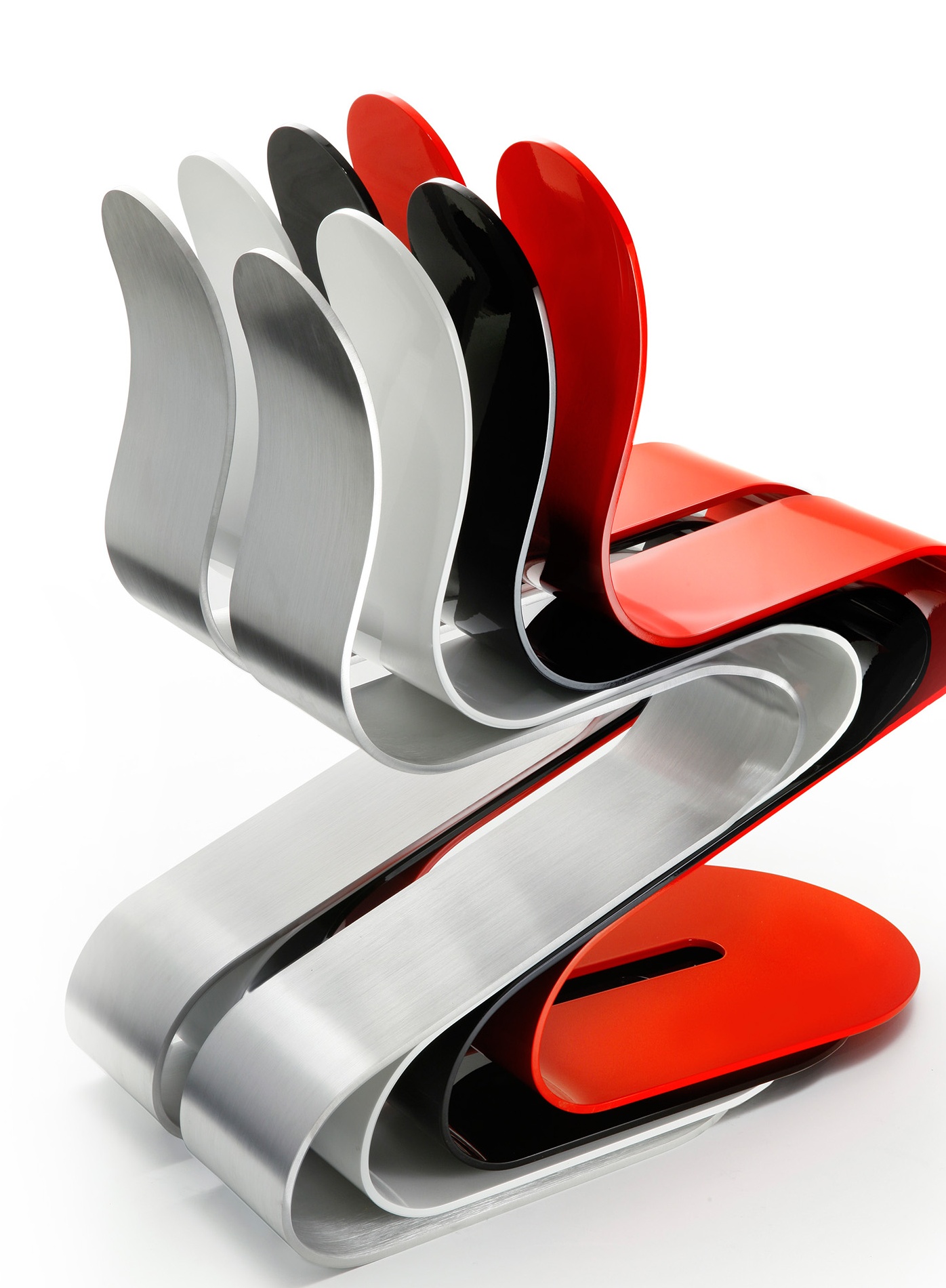
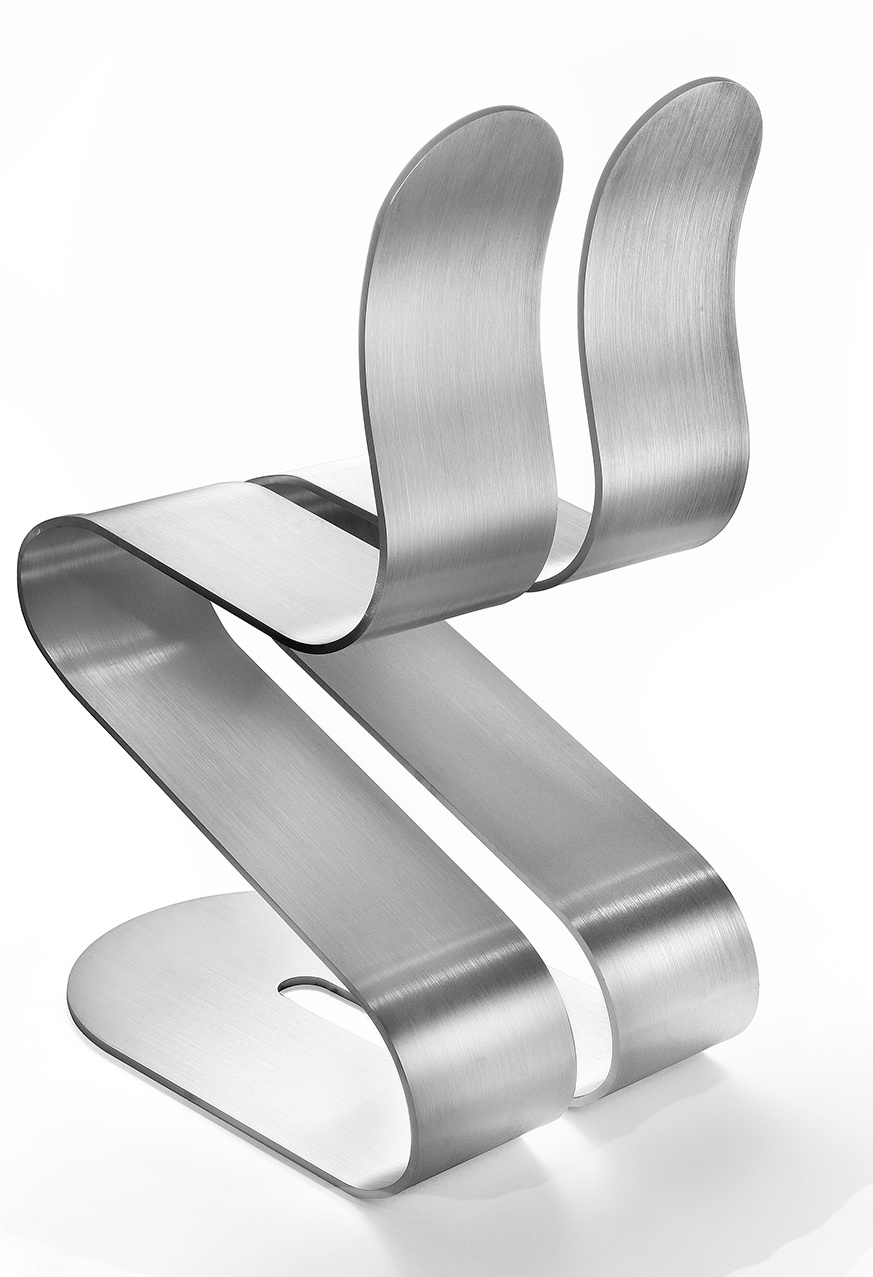
The aluminum chair is formed from a single sheet by Lamberti Design in Cava de’ Tirreni, on the Amalfi Coast — a metalworking workshop of more than fifty years, working in aluminum, brass, copper, corten and steel. Each chair is made to order and stamped with a production number.
Designed in America. Made in Italy.
- Lacquered aluminum, formed from a single sheet
- Brushed aluminum, white, black, red — other colours to order from the RAL range
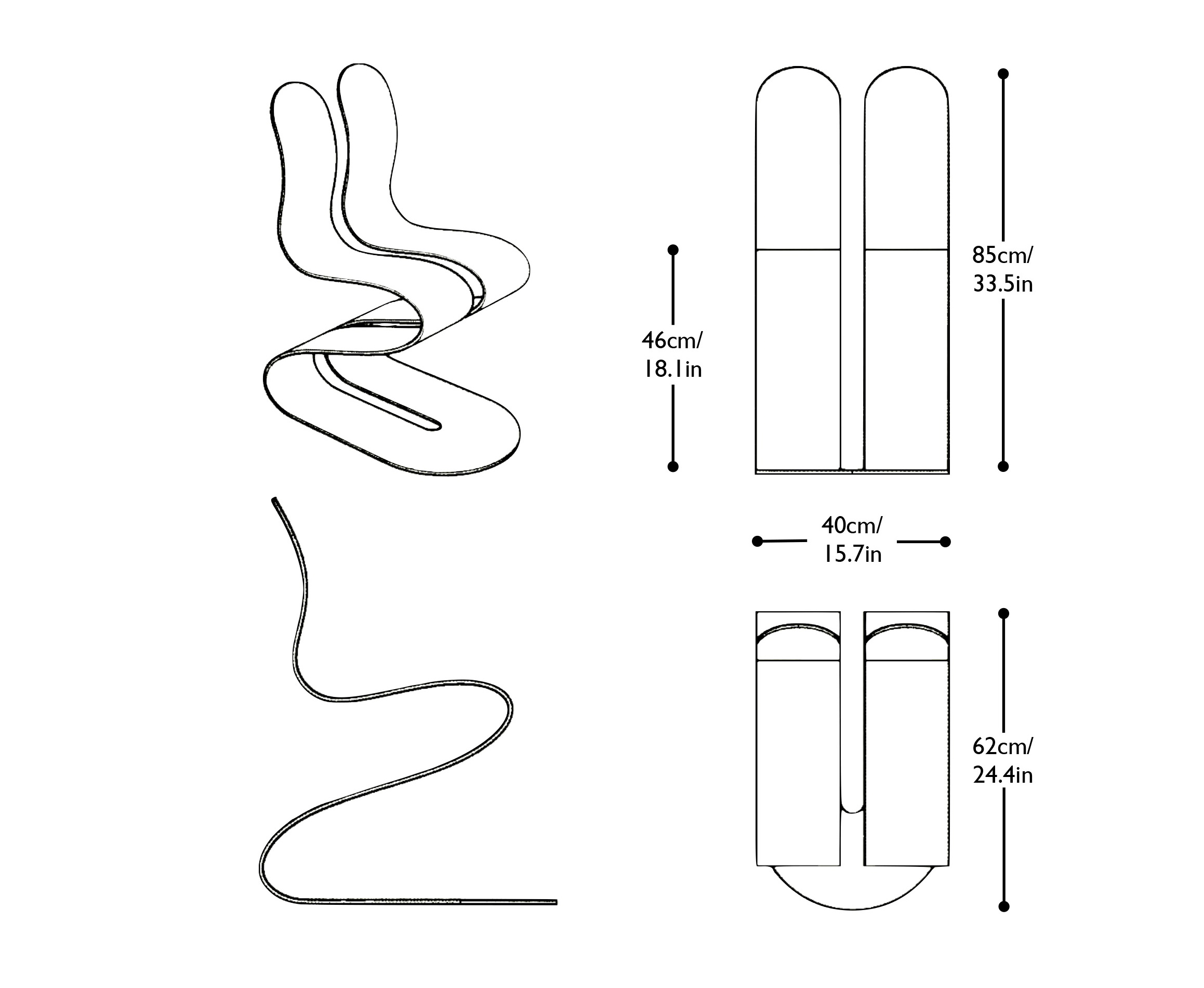
- Height 85 cm / 33.5 in — seat height 46 cm / 18.1 in — width 40 cm / 15.7 in
- Stackable. Suitable for indoor and outdoor use
- Leather and nautical covers available
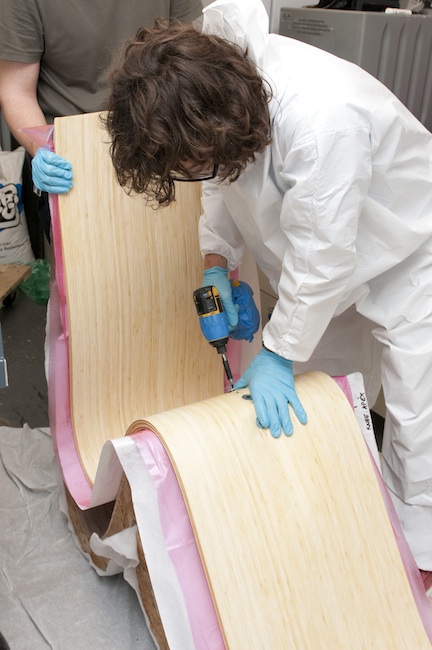
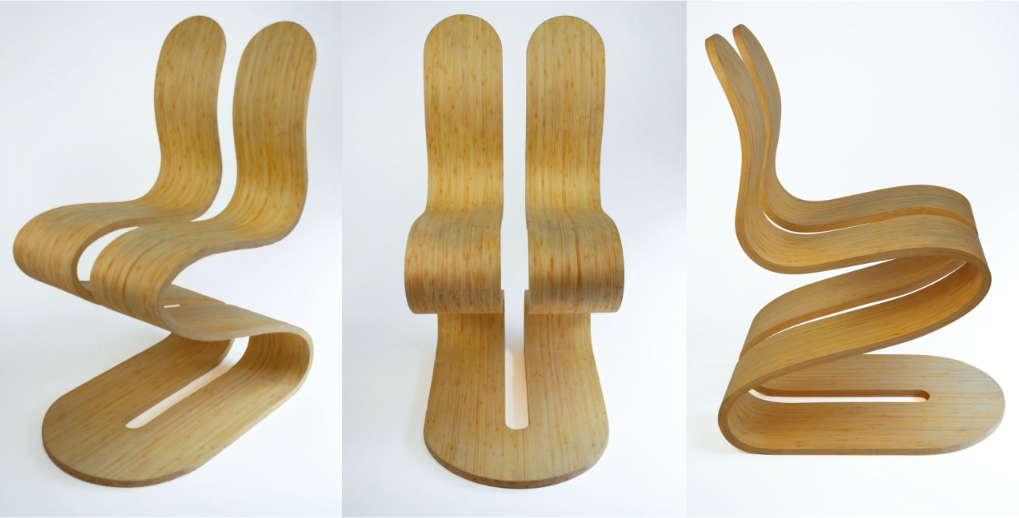
Before the aluminum chair, six were made by hand in bamboo veneer and epoxy — vacuum-pressed into a mould, hand-cut to final form, finished in natural tung oil. Roughly a hundred hours each. They are signed and numbered 0.1 to 0.6. The moulds were destroyed.
Three natural: one donated to a breast cancer research fundraiser, two placed in private collections including Waterfall Mansion, New York. Three ebony: one owned by the violinist Joshua Bell. Two remain with the designer.
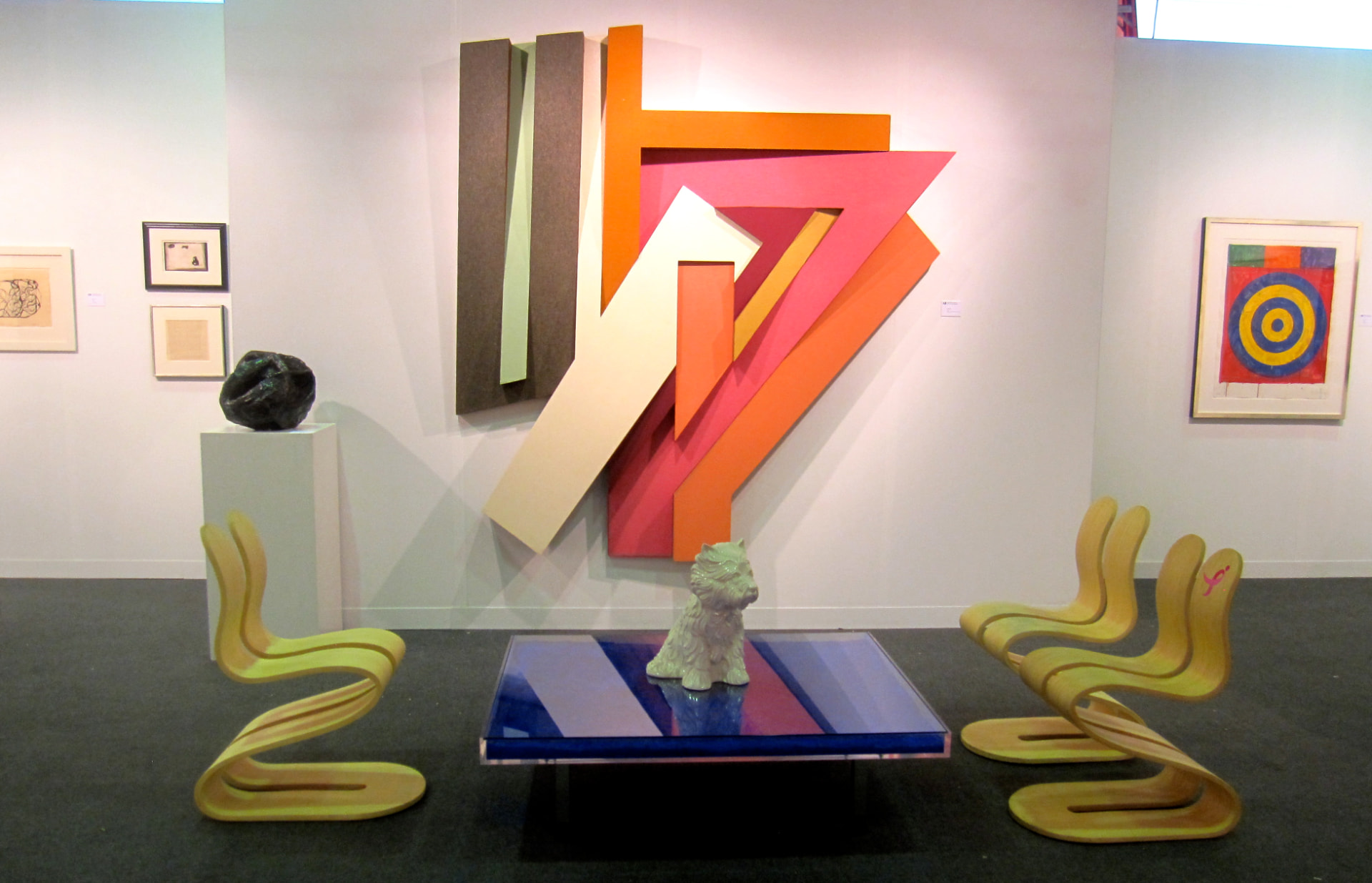
- Salone del Mobile, Milano, with Lamberti — Hall 8, E49
- designjunction, London — Sorting Office, New Oxford Street
- The Armory Show, with Armand Bartos Fine Art
- ArtHamptons, with Anthony Brunelli Fine Art
- IDSA New York, Furniture Section
- Waterfall Mansion, New York — curated into the collection by Kate Shin
- Design Philadelphia — /Adaptations/ and Four Corners PHL
- RAI, La grande famiglia 3
- Metropolis, Philadelphia Inquirer, The Roger
“Even the minimalist Fluid Ribbon Chair evolved as a way to cope with pain and a need to work more productively.”
“Michael d’Amato frames his journey to the Fluid Ribbon Chair in terms of Joseph Campbell’s trope of the hero quest. Everything in his life led to its making.”
Commissions
A brand rarely wants an object in a room. What it wants is a conversation with the person who walks in, one that outlasts a photograph and that the visitor carries out with them and continues somewhere else.
This chair opens that conversation through the body rather than through a message. Someone sits down, the chair moves with them, and they almost always say something out loud. Whatever they say next is where a brand can meet them, and the ground has already been prepared: adaptation, holding shape under tension, the cost of sitting still. None of it has to be asserted, because the person has just felt it, and that is why it lands. At Design Philadelphia, where the chair appeared in two curated exhibitions, the local press named sitting in it the most memorable moment of the festival.
The form can be issued as a limited edition for a particular context, re-materialised and re-finished and developed to a brief, produced by Lamberti in Italy and stamped in sequence. It works as a permanent installation or a temporary one, in a brand environment, a hospitality interior or an architectural commission. The original surface geometry and cutting profiles are held in CAD, so a new material, finish or scale begins from the drawing rather than from the beginning.
Michael d’Amato
Inquiries and commissions — mpdamato@gmail.com